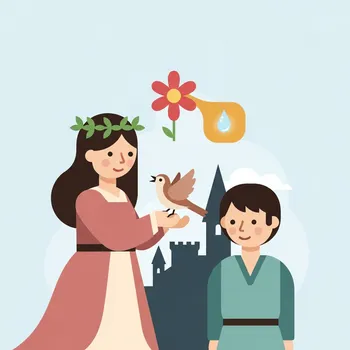
One winter day, a woman stood in the garden under an old juniper tree. The snow lay white and still. As she peeled an apple, she cut her finger, and three drops of blood fell onto the snow. It looked so beautiful, red on white, that she wished, "If only I could have a child, a child so beautiful and good!" Spring came, the apple trees blossomed, and soon she carried a child.
When the baby, a little boy, was born, she became so happy that tears glistened. But her happiness grew so profound and heavy that she fell ill, and after some time, she quietly passed away. The man buried his wife under the juniper tree, where she had wished for her child. The tree smelled sweet, as if it watched over them.
After some time, the man married again. The new wife also had a child, a little girl named Marlinchen. Marlinchen was gentle and good, and she loved her brother. But the stepmother looked at the boy with hard eyes. She knew he was the firstborn and would one day inherit. Jealousy grew in her like a shadow.
One day, when the wind was mild and the juniper tree rustled, the stepmother said, "Would you like a fine, red apple?" The boy nodded. "Go to the chest in the chamber and take one," she said. The chest was large, with a heavy lid. The boy leaned in to reach the apple, and just then the lid slammed shut with a hard sound. All became quiet. The boy moved no more.
The stepmother became afraid of what she had done. She placed the boy on a chair at the table, wrapped a scarf around his neck, and laid an apple in his hand, making it look as if he sat there quietly. When Marlinchen came in, she called happily, "Brother, will you play?" But he didn't answer. She touched him, and he tilted his head strangely. Marlinchen began to cry. "What have I done?" she whispered in fright.
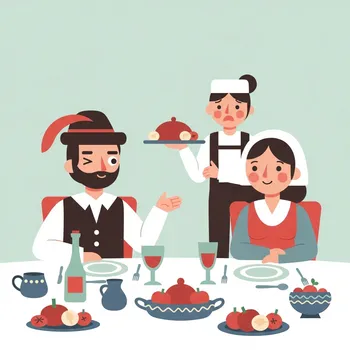
"Say nothing," whispered the stepmother quickly. "Your father will be home soon. Help me set the table." When the father came home, the stepmother cooked a pot of meat soup. She served it with a friendly smile. The father ate, tired and hungry, and said over and over, "This is the best soup I've ever tasted." He suspected nothing. Marlinchen sat quietly, crying into her apron.
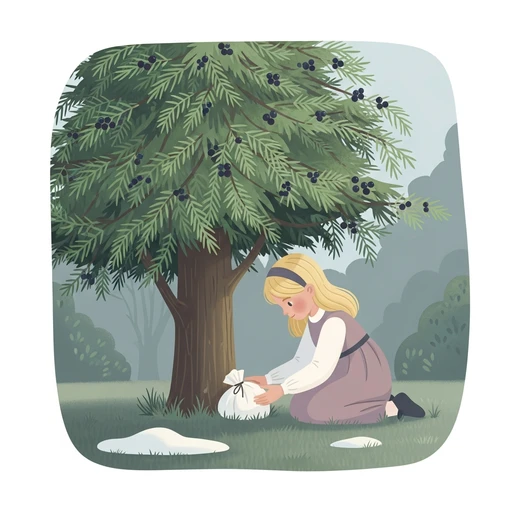
When the meal was over, Marlinchen sneaked away. She carefully gathered her brother's small bones, wrapped them in a soft silk cloth, and carried them out. Under the juniper tree, she dug into the earth with her hands. She laid down the bundle, smoothed the earth flat, and whispered, "Sleep well, brother." Then the juniper tree began to rustle deeply, and the air became warm and still. From the branches rose a light mist, and high above, a bird flew out — gleaming, beautiful, and strong.
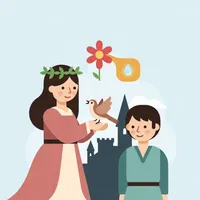
The bird perched on a branch and sang with a clear voice:
"My mother she killed me, my father he ate me, my sister Marlinchen gathered my bones, laid them in silk, placed them under the juniper tree. Tweet tweet, what a beautiful bird I am!"
The bird flew toward the village. It perched on a window ledge at a goldsmith's. The goldsmith stopped, so moved by the song that he came out with a glittering golden chain. "Sing again, dear bird," he asked. The bird sang the verse, and the golden chain shone like the sun. "This is for you," said the goldsmith. The bird took the chain in its beak and flew onward.
Then the bird perched on the roof at a shoemaker's. The shoemaker's daughter stopped treading the last and listened. "Sing again, please, bird," she called and held forth a pair of red, dancing shoes. The bird sang:
"My mother she killed me, my father he ate me, my sister Marlinchen gathered my bones, laid them in silk, placed them under the juniper tree. Tweet tweet, what a beautiful bird I am!"
The girl gave the bird the shoes. "Give them to someone who needs joy," she said. The bird nodded and flew toward the mill by the brook. The mill wheel thundered, but when the bird sang, everything fell silent, and the millers came out. "Sing again, strange bird!" they called and rolled out a round, heavy millstone as a gift.
The bird sang its verse one more time, and the millers smiled and wiped flour from their hands. The bird rolled the millstone with the wind at its back, took the chain and shoes in its beak, and flew home to the house where the father, stepmother, and Marlinchen lived.
The father sat at the table, tired and with a dull, gray gaze. Marlinchen stood in the doorway, her eyes red from crying. The stepmother walked restlessly back and forth, as if something heavy pressed upon her heart. Then the bird perched in the juniper tree outside and sang with a clear and gentle voice. The father listened and felt the sorrow lighten a little.
The bird let the golden chain slide down through the window. It fell straight into the father's hands. "For you," sang the bird, "so you may remember love and see clearly." The father clasped the chain around his neck and suddenly felt warm and strong.
Then the bird flew to Marlinchen and laid the red shoes in her lap. "For you," it sang, "so your feet may carry you away from tears and into joy." Marlinchen put on the shoes, and for the first time in a long while, she smiled through her tears. She began to dance small, soft steps in the courtyard.
Then the stepmother became worried. "I feel the heat from the fire," she mumbled, and her heart pounded hard. The bird hovered over her and whispered, "And to you comes what the world weighs." With a swirling wind and a hum of air, the bird let the millstone fall.
The ground shook. When the dust settled, all was quiet. The heavy stone lay still, and the stepmother's hard gaze was no more. The juniper tree rustled deeply, but no longer like a sigh, more like a release.
From the gentle smoke from the branches, the bird came down and landed in the courtyard. It blinked at Marlinchen, and in the next moment, there stood a boy, alive and whole. His eyes were the same blue as before. "Sister," he said and took her hand. Marlinchen threw her arms around his neck, and the father ran forward and held them both, with the golden chain gleaming against his chest.
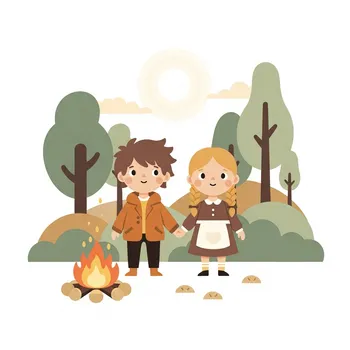
Together they went into the house. They opened the windows so the scent from the juniper tree could stream in. The father set out bread and milk. Marlinchen danced in her red shoes, and the boy smiled at her. Outside in the garden, the juniper tree stood still and strong, like a friend who had watched, whispered, and sung until the truth came home.
And from that day, the house was lighter. Sorrow can be heavy, but love is heavier and carries it. The juniper tree rustled, no longer of secrets, but of peace.

The end