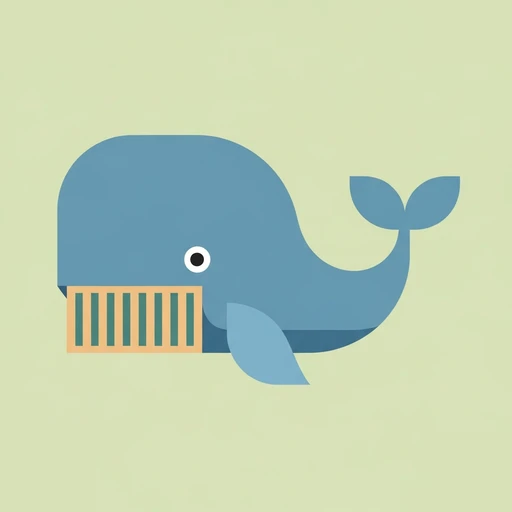
Once upon a time, in the very beginning of everything, there was a Whale in the big, blue sea. He ate fish. He ate big fish and small fish, long fish and round fish, until almost no fish were left. All that remained was one single, small, glittering, very clever fish. It was called The Clever Fish, for it knew what was good to do and what was best to avoid.
The Whale rolled his massive back and said: "I am hungry."
"You have eaten almost everything," said The Clever Fish, keeping out of reach of the great mouth. "But you have never tasted a Human."
"A human?" bellowed the Whale. "Where do I find such a thing?"
The Clever Fish waved his tail and whispered: "Swim to fifty degrees north and forty degrees west. There you will find a small raft. On it sits a sailor. He has blue canvas breeches, suspenders, a skipper's cap, and a jackknife in his pocket. He is the only survivor of a shipwreck, and he is very, very hungry—but you are hungrier."
The Whale let bubbles rise like pearls and swam as fast as he could. The sea grew colder, the waves higher, and right there, at fifty degrees north and forty degrees west, bobbed a small, rickety raft. On the raft sat a sailor, just as the fish had said: blue canvas breeches, suspenders across his chest, a skipper's cap on his head, and a jackknife in his pocket. He was salty from the sea and thin from waiting.
The Whale sneaked under the raft, opened his gigantic mouth, and said: "SLURP!" He swallowed both sailor and raft, all in one big, wet gulp. Then he clapped his fin proudly and began looking for something else to eat.
But inside the great stomach, it was dark, slippery, and not at all pleasant. The sailor, who was cunning, took out his jackknife. He didn't scrape the inside of the whale—no, he did something even smarter. He began to jump. He stamped with his sea boots, he danced jigs and polkas, he thumped on the ribs with his hands and sang old sea shanties as loud as he could. It tickled and scratched and rumbled inside the whale, so the whale got the hiccups and couldn't swim straight.
"Stop!" gasped the Whale. "I'm itching all over."
"Let me out then," said the sailor, "and take me back to the sandbank where I belong, just behind the next long wave."
The Whale, who mostly wanted peace and quiet in his stomach, steered towards a broad, sunny sandbank. But while he swam, the sailor thought on. He wasn't just cunning—he was wise as a compass. "If I just walk out," he thought, "he might swallow me again." So he took planks from his little raft, spliced them with rope ends, and tied everything together with his suspenders until he had made a sturdy grate, like a gate of wooden slats.
When the Whale arrived at the sandbank and opened his mouth to say "OUT!", the sailor quickly placed the grate upright, right in the whale's throat, and wedged it tight with knots and hitches that only a real sailor knows. Then the sailor slid out over the wet tongue, splashed into the shallow water, and waded up onto the beach. He bowed politely to the Whale, shook the sand out of his cap, and put the jackknife in his pocket.
"Now, my big friend," said the sailor from dry land, "you can try to swallow me again if you can."
The Whale tried. He gaped. He swallowed. But the grate sat there like a gate, steady and resolute. In came the water. In came small shrimps, small fish, and small crabs, but everything that was big got stuck and stopped. The Whale spouted, shook himself, and rolled over, but the sailor's grate stayed put.
"It doesn't matter being big," said the sailor kindly but firmly. "But a big appetite must often learn small bites." Then he waved goodbye, built a better raft of driftwood, and sailed away, while his suspenders—or what was left of them—still held the grate where it was supposed to be.
Just then The Clever Fish cautiously poked his head out of the waves by the sandbank. "I told you so," he whispered and winked with one fin. "Humans are not like other prey." Then he darted away with a splash so as not to be eaten at all, neither before nor after.
The Whale, who now had a grated gate in his throat, had to rethink. He swam to where the deep was dark blue and tried again. Big fish? No. Fat seals? No. Ships? Absolutely not. But when he let the water sift through the grate, small, wiggling treats came swirling in—shrimp, plankton, and tiny fish, in quantities that glittered like stars. They slid nicely past the slats, and the Whale became full anyway.
And from that day to this, the Whale—and all his relatives who want peace in their stomachs—must eat small things and sift their food through something that looks like a grate. You can call it baleen if you want, for it works almost the same way: a fine, firm gate in the throat that says yes to small things and no to big ones. That is how the Whale got his throat which doesn't let big things through, and that is why he no longer swallows sailors, rafts, or other foolishness.
And if you ever sail north to fifty degrees north and forty degrees west, you might see a very large back and hear a very deep sigh. It is the Whale remembering that cunning can be bigger than size, and that a small jackknife, a pair of suspenders, and a bright idea can change the whole ocean.

The end